
Last updated: June 2026
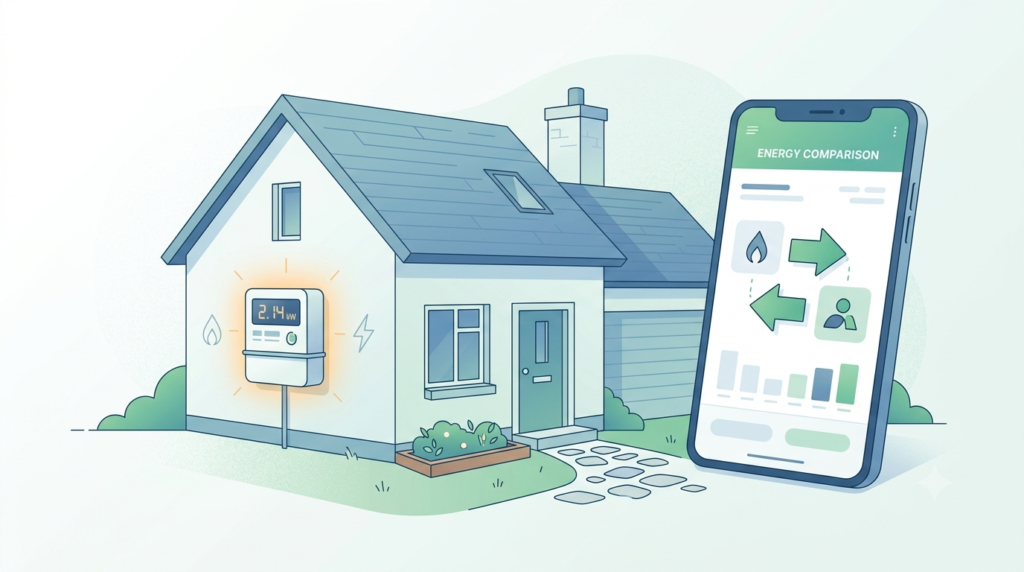
If you’ve never switched your gas and electricity supplier, you’re probably not alone — and you’re probably paying more than you need to. Millions of UK households are still sitting on default tariffs that cost noticeably more than the cheapest deals on the market. The good news? Switching in 2026 is faster, safer, and simpler than it’s ever been.
This guide walks you through exactly how to switch your energy supplier in the UK, what to prepare beforehand, how long it takes, and the mistakes that catch people out.
Why Switching Energy Supplier Still Matters in 2026
Energy prices have settled down compared to the volatility of recent years, but the gap between the cheapest and most expensive tariffs is still significant. Households who haven’t switched in 12–24 months are often paying well over £150–£250 more per year than they need to, simply because their fixed deal expired and they rolled onto a standard variable tariff.
Thanks to Ofgem’s Faster Switching Programme, the entire process — from picking a new deal to your old account closing — now typically takes between three and five working days, down from the multi-week waits households dealt with a few years ago.
Before You Switch: What You’ll Need
Switching is mostly automated these days, but having a few details ready makes the process quicker and helps you avoid a messy final bill.
- Your current supplier’s name and tariff name — found on a recent bill or in your online account
- Your annual energy usage in kWh for both gas and electricity (also on your bill)
- Your postcode and payment method (Direct Debit, prepayment, etc.)
- A recent meter reading — not essential to start a switch, but useful for comparing deals accurately
- Your account balance — if you’re in debt with your current supplier, this can affect your ability to switch (more on this below)
Step 1: Check What You’re Currently Paying
Before comparing anything, pull up your latest bill and note your unit rate (pence per kWh) and standing charge for both gas and electricity. Without this, you’re comparing blind — a deal that looks cheap on the headline rate might actually cost more once standing charges are factored in.
A typical UK household uses around 2,900 kWh of electricity and 11,500 kWh of gas per year, but your actual usage could be very different depending on your home size and habits, so use your real figures wherever possible.
Step 2: Compare Tariffs Properly
This is where most people go wrong — they look only at the unit rate and ignore everything else. When comparing deals, check:
- Standing charges — the daily fee you pay regardless of usage
- Contract length — most fixed deals run 12–24 months
- Exit fees — increasingly rare, but worth checking before you commit
- Discounts for paperless billing or Direct Debit
- Whether the tariff is renewable if that matters to you
Use an independent, Ofgem-accredited comparison tool rather than relying on a single supplier’s website, since you’ll only see their own deals there.
Step 3: Submit Your Switch
Once you’ve picked a supplier, the process itself is short:
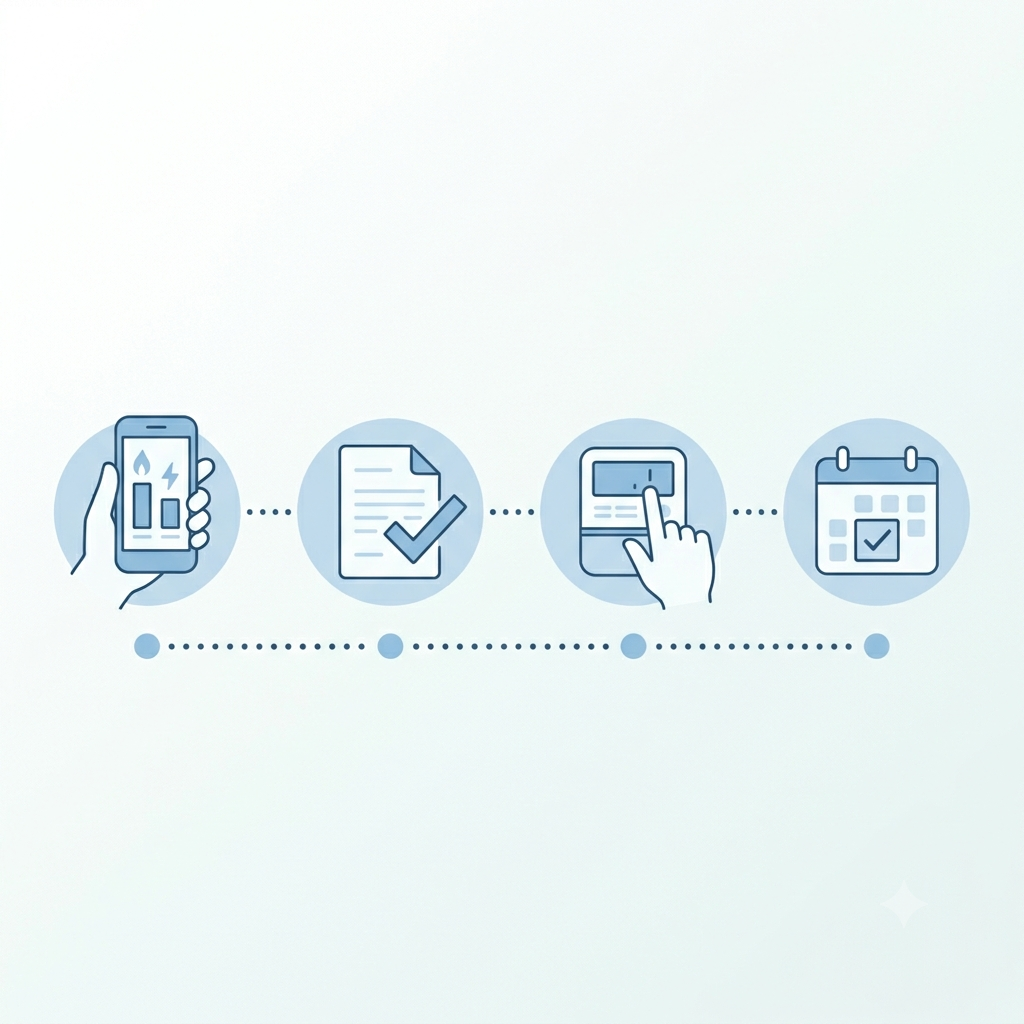
- Go to the new supplier’s site and select “switch to us” (or do it through a comparison site)
- Provide your address, current supplier, and payment details
- Confirm — this usually takes under 10 minutes
From here, your new supplier contacts your old one and handles the technical side of the transfer. You don’t need to do anything else, and there’s no engineer visit required unless your meter needs upgrading to a smart meter.
Step 4: Take Meter Readings on Switch Day
On the day your switch goes live, take a reading from your meter and submit it to both your old and new supplier if possible. This single step prevents the most common switching headache: a disputed or estimated final bill.
Step 5: Use Your 14-Day Cooling-Off Period
Every switch comes with a 14-day cooling-off period after you sign up. If you change your mind, find a better deal, or made a mistake, you can cancel free of charge within this window. After that, you can still switch again at any time — there’s no limit on how often you’re allowed to do it.
What If You Owe Your Current Supplier Money?
Debt can complicate (but doesn’t always block) a switch:
- Debt under 28 days old — this usually doesn’t stop you switching; it gets added to your final bill
- Debt over 28 days old — you’ll typically need to clear it first, or agree a repayment plan
- Prepayment meters — you can usually still switch with debt up to £500 per fuel (£1,000 total)
If you’re unsure, check your online account balance before starting the process.
How Long Does Switching Actually Take?
| Stage | Typical Timeframe |
|---|---|
| Submitting the switch | 10 minutes |
| Supplier-to-supplier transfer | 3–5 working days |
| Final bill from old supplier | Within 6 weeks |
| Cooling-off period | 14 days from sign-up |
Throughout the entire process, your supply is never interrupted. The same pipes and cables deliver your gas and electricity regardless of who bills you — switching only changes who you pay.
Common Mistakes to Avoid
- Comparing headline rates only and ignoring standing charges
- Forgetting to take meter readings on the switch date
- Assuming your current supplier is the cheapest at a new property (they almost never are)
- Letting a prepayment meter run low during a house move
- Not checking exit fees before leaving a fixed deal early
Is It Safe to Switch Energy Supplier?
Yes. Every UK energy supplier is regulated by Ofgem, which sets standards around customer protection, complaint handling, and fair treatment. Your supply will never be cut off as part of a switch, and if anything goes wrong, you can escalate to the Energy Ombudsman after eight weeks of an unresolved complaint (or immediately if the supplier issues a deadlock letter).
How Often Should You Switch?
At minimum, switch whenever your fixed tariff is about to end — staying on a default/standard variable rate after that point is almost always the most expensive option. For the best results, check the market every 3–6 months and switch if you can find savings of £50 a year or more.
Final Thoughts
Switching energy supplier in the UK is no longer the hassle it used to be. With Ofgem’s faster switching rules, most of the admin is handled for you, the process takes under a week, and you’re protected by a 14-day cooling-off period the whole way through. The only real risk is not switching — and quietly overpaying on a default tariff year after year.
This article is for general guidance only and isn’t financial advice. Always check current tariffs and terms directly with suppliers or via Ofgem before switching.
FAQs
Will my energy supply be interrupted while I switch? No. The same physical infrastructure delivers your gas and electricity — only the billing company changes.
Can I switch if I’m in a fixed-term contract? Yes, though you may be charged an exit fee depending on your contract terms. Many modern tariffs now have no exit fees.
How many times can I switch in a year? There’s no limit. You can switch as often as you like once any cooling-off period has passed.