



By [Mubeen Ahmed] | Updated: June 2025 | ⏱ 10 min read Best Personal Finance Apps
Our Top Picks at a Glance
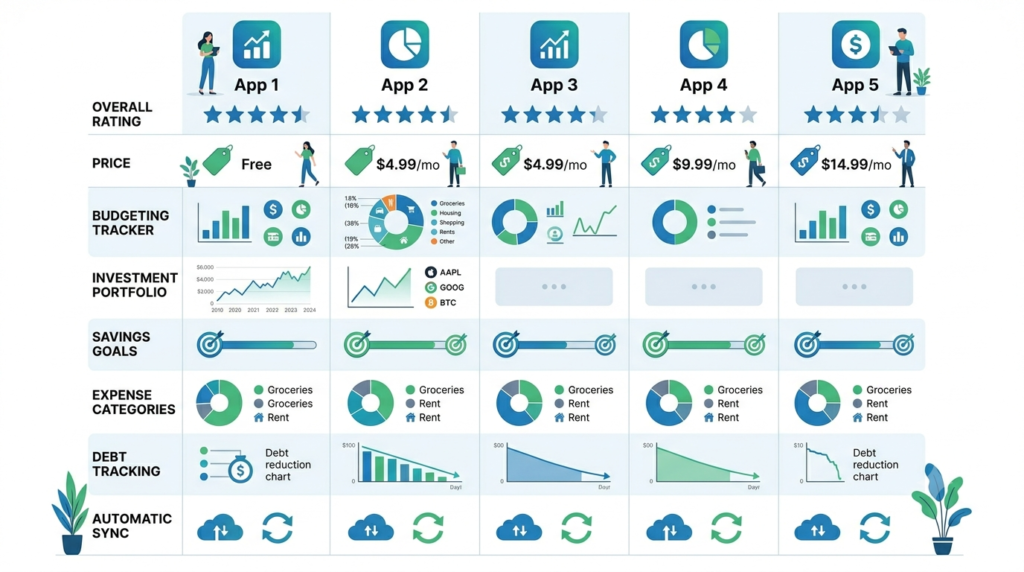
| App | Best For | Starting Price | Rating |
| Quicken Simplifi | Best Overall | $3.99/mo | ⭐ 4.8/5 |
| YNAB | Best for Budgeting | $14.99/mo | ⭐ 4.7/5 |
| Empower | Best Free App | Free | ⭐ 4.6/5 |
| Monarch Money | Best All-in-One | $14.99/mo | ⭐ 4.6/5 |
| Rocket Money | Best Subscription Tracker | Free / $6-$12/mo | ⭐ 4.5/5 |
| Tiller Money | Best for Spreadsheet Lovers | $79/yr | ⭐ 4.4/5 |
| PocketGuard | Best for Overspenders | Free / $12.99/mo | ⭐ 4.3/5 |
| Copilot | Best for iPhone Users | $13.99/mo | ⭐ 4.3/5 |
“How to Create a Monthly Budget That Actually Works”
Introduction
Managing money has never been more overwhelming — or more important. Between rising inflation, student loans, credit card debt, and the pressure to save for retirement, most people feel like they are always one bad month away from financial chaos. The good news? The best personal finance apps can turn that chaos into clarity.
We spent over 120 hours testing more than 20 personal finance apps to bring you this definitive list. Whether you are living paycheck to paycheck and need a serious budgeting system, or you already have solid savings and want to track your investments — there is an app built exactly for your situation.
From completely free tools like Empower to premium powerhouses like YNAB, this guide breaks down everything you need to know: features, pricing, pros, cons, and who each app is truly best for.
Let’s get into it.
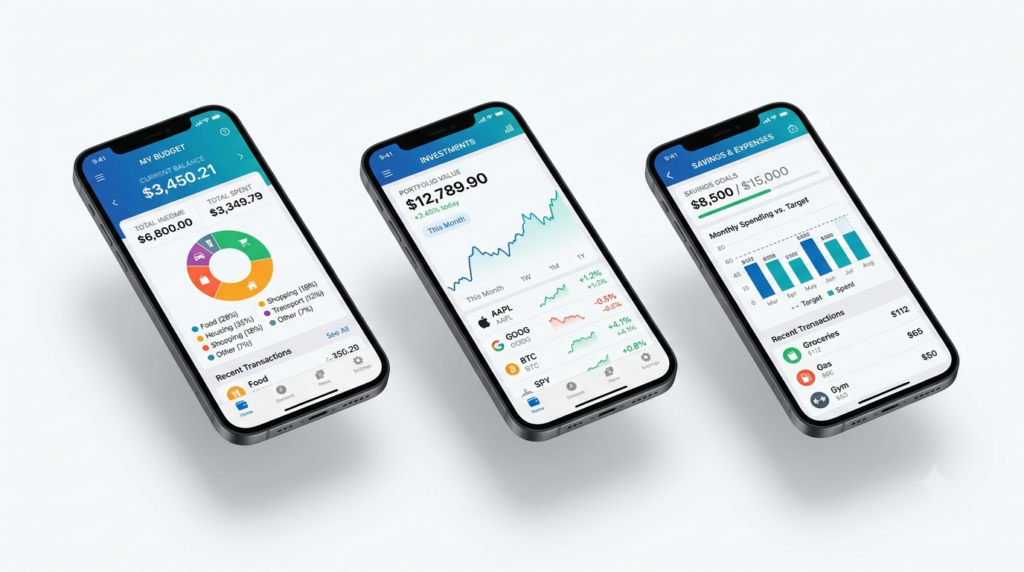
How We Test Personal Finance Apps
Our testing process is not based on marketing claims — it is based on real-world use. Here is how we evaluate every app on this list:
- Account Syncing: We test how many financial institutions each app connects to and how reliably transactions sync in real time.
- Budgeting Tools: We assess whether the budgeting system is flexible, easy to set up, and actually motivates behavioral change.
- Investment Tracking: For apps that claim investment features, we tested portfolio views, retirement projections, and fee analyzers.
- User Interface (UI): We rate apps on how easy they are to navigate for both beginners and advanced users.
- Security: We verify two-factor authentication, encryption standards, and data sharing policies.
- Value for Money: We compare what each app offers against its price to determine if it is worth paying for.
We only recommend apps we would use ourselves.
“How to Secure Your Financial Accounts Online”
The 8 Best Personal Finance Apps of 2025
1. Quicken Simplifi — Best Overall Personal Finance App
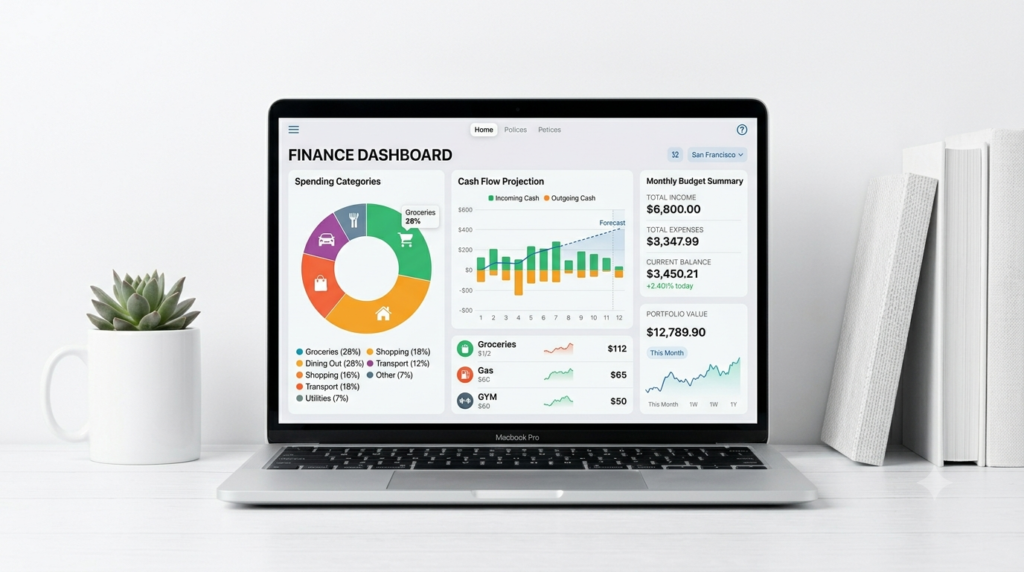
⭐ Rating: 4.8 / 5 💰 Price: $3.99/month (first year) | $5.99/month after 📱 Platforms: iOS, Android, Web
Why We Picked It:
Quicken Simplifi earns the top spot on our list for one simple reason — it does everything well without overwhelming you. Within minutes of signing up, Simplifi connects to your bank accounts, credit cards, and investment accounts to give you a real-time snapshot of where your money is going.
The standout feature is its Spending Plan, which is not a rigid monthly budget but a living, breathing financial picture that adjusts as your income and expenses change. It separates your recurring bills from your flexible spending, so you always know exactly how much “free money” you actually have.
Its cash flow forecasting tool is a personal favorite — it shows you projected balances days and weeks ahead so you can spot problems before they happen. For anyone who has ever been blindsided by an overdraft fee, this feature alone is worth the subscription.
PC Magazine named Simplifi “Best Overall Personal Finance Software” in both 2024 and 2025, and we completely agree.
✅ Pros:
- Extremely clean and beginner-friendly interface
- Real-time account syncing across 14,000+ financial institutions
- Projected cash flow view is genuinely useful
- No ads and no selling of your data
- Affordable compared to full Quicken Classic
❌ Cons:
- No bill pay feature built in
- Investment tracking is decent but not as deep as Empower
- Requires annual billing for best price
🏆 Best For: People who want one clean app that handles budgeting AND cash flow without a steep learning curve.
🔗 “Try Quicken Simplifi Free for 30 Days →” (link to: simplifi.quicken)
2. YNAB (You Need a Budget) — Best App for Serious Budgeters
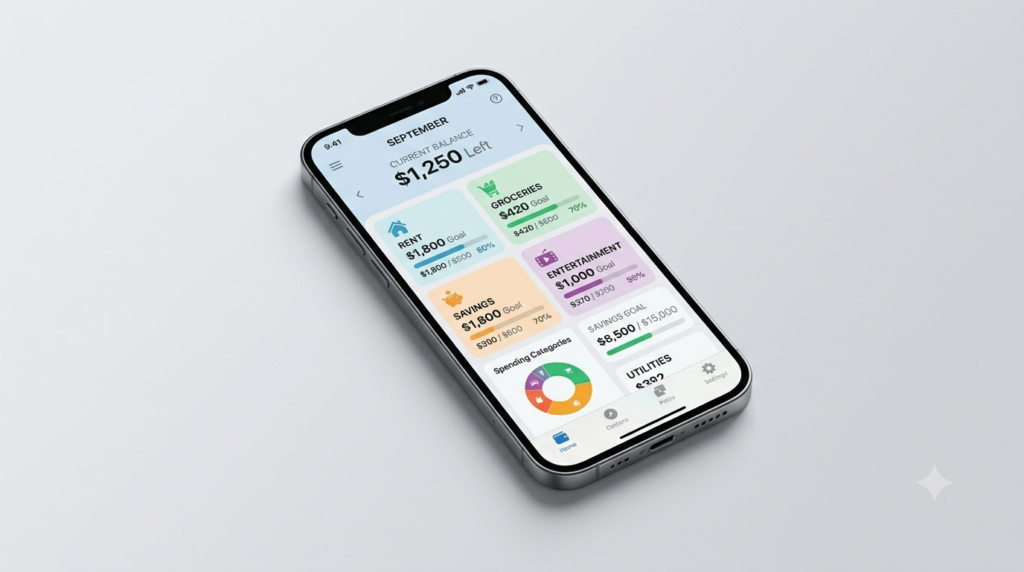
⭐ Rating: 4.7 / 5 💰 Price: $14.99/month or $99/year | Free for students (1 year) 📱 Platforms: iOS, Android, Web
Why We Picked It:
YNAB is not just a budgeting app — it is a complete financial philosophy packed into software. Built around four simple rules (Give Every Dollar a Job, Embrace Your True Expenses, Roll With the Punches, Age Your Money), YNAB forces you to be intentional about every dollar you earn.
This is not the app for casual budgeters. This is the app for people who are genuinely serious about paying off debt, breaking the paycheck-to-paycheck cycle, or building their first real emergency fund. YNAB users report saving an average of $600 in their first two months — and that number grows significantly over time.
The interface is beautifully organized. You assign every dollar that comes in to a specific category (rent, groceries, subscriptions, etc.) before you spend it. When you overspend in one category, you simply move money from another. No guilt — just real-time adjustments.
✅ Pros:
- The most effective method for breaking the paycheck-to-paycheck cycle
- Excellent educational resources and live budgeting workshops
- Strong goal-setting tools
- Works on all major platforms including Apple Watch
- Free for college students
❌ Cons:
- Steepest learning curve on this list
- Most expensive app at $14.99/month
- No investment tracking or net worth monitoring
- Takes 1–2 months to fully “click” for new users
🏆 Best For: People with debt, irregular income, or those who want to completely transform their spending habits.
🔗 “Start Your Free 34-Day YNAB Trial →” (link to: youneedabudget)
3. Empower Personal Dashboard — Best Free Personal Finance App

⭐ Rating: 4.6 / 5 💰 Price: Completely Free 📱 Platforms: iOS, Android, Web
Why We Picked It:
If you want a powerful personal finance tool and you do not want to spend a single dollar, Empower (formerly Personal Capital) is your answer. The free dashboard is genuinely impressive — it aggregates all your financial accounts in one place and gives you a high-level view of your net worth, cash flow, investments, and retirement readiness.
The Investment Checkup tool stands out among everything else it offers. It analyzes your current portfolio allocation, compares it against your target, and shows you exactly where you are over or under-weighted — all for free. The Fee Analyzer is another killer feature that many paid apps do not offer. It scans your investment accounts and reveals hidden fees that could be costing you thousands over time.
Empower does not sell your data and does not show you ads — their revenue model is built around their optional (and separate) paid wealth management service for accounts over $250,000.
✅ Pros:
- 100% free — no paid tier required for the tools
- Best net worth tracker on this list
- Investment portfolio analysis is genuinely professional-grade
- Retirement planner built in
- No ads, no data selling
❌ Cons:
- Budgeting tools are basic compared to YNAB or Simplifi
- You will receive calls from Empower’s financial advisors (politely decline if not interested)
- No bill tracking or subscription management
🏆 Best For: Investors, high earners, and anyone who wants to track net worth and investments without paying a subscription.
🔗 “Sign Up for Empower for Free →” (link to: empower)
4. Monarch Money — Best All-in-One Money Management App

⭐ Rating: 4.6 / 5 💰 Price: $14.99/month or $99.99/year 📱 Platforms: iOS, Android, Web
Why We Picked It:
Monarch Money has quickly become the most-loved Mint alternative since Mint shut down in 2024. Named Best Budgeting App by both Forbes and The Wall Street Journal, Monarch combines beautiful design with genuine financial depth.
What sets Monarch apart is how it handles shared finances. Couples, roommates, and family members can all collaborate within one account — seeing a combined view or keeping certain accounts private. This makes it uniquely suited for households where more than one person manages money.
The financial planning tools are also a level above what most apps offer. You can set long-term goals (buy a house, pay off student loans, retire at 60), and Monarch builds a road map showing whether you are on track or falling behind.
✅ Pros:
- Best collaborative budgeting for couples and families
- Stunning, modern interface
- Strong financial goal-planning features
- Excellent transaction categorization with manual override
- Active development team that releases regular updates
❌ Cons:
- Pricier than Quicken Simplifi
- Investment tracking is present but basic
- No bill pay integration
🏆 Best For: Couples and families who want to manage money together in one elegant app.
🔗 “Try Monarch Money Free for 30 Days →” (link to: monarchmoney)
5. Rocket Money — Best for Canceling Subscriptions
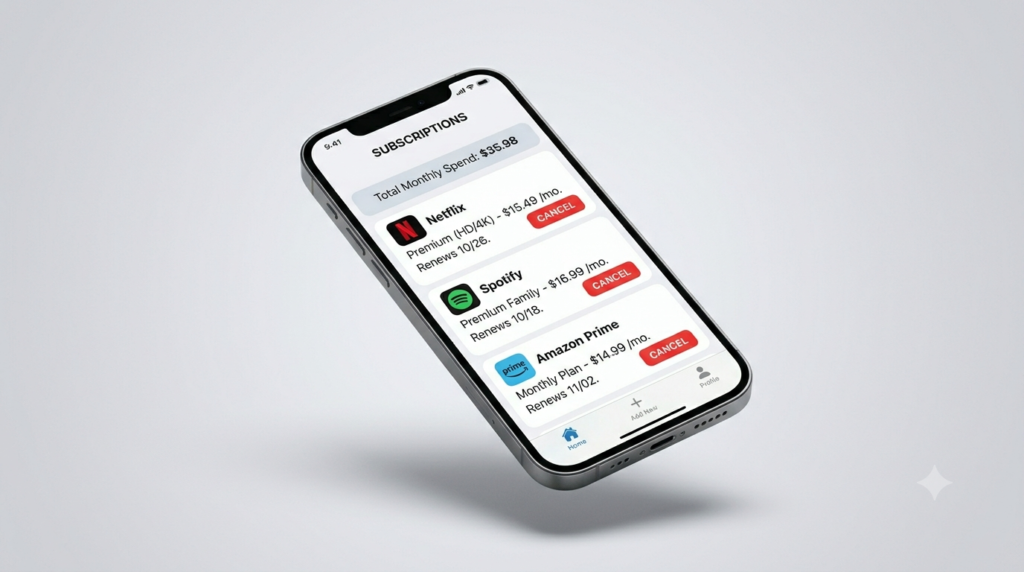
⭐ Rating: 4.5 / 5 💰 Price: Free (limited) | Premium: $6–$12/month 📱 Platforms: iOS, Android, Web
Why We Picked It:
Most people are paying for 2 to 3 subscriptions they completely forgot about. Rocket Money finds them — and can cancel them for you. That single feature has made it one of the most downloaded personal finance apps in the US.
Beyond subscriptions, Rocket Money tracks your spending, helps you build a budget, and negotiates lower bills on your behalf (for a cut of the savings). It also offers a premium “smart savings” feature that automatically moves money to savings based on your cash flow.
It is not the deepest budgeting tool on this list, but for someone who simply wants to stop leaking money on forgotten charges, Rocket Money is genuinely excellent.
✅ Pros:
- Finds and cancels unused subscriptions with one tap
- Bill negotiation service can save significant money
- Clean, easy-to-understand interface
- Free tier is surprisingly capable
- Automatic savings transfers based on your income
❌ Cons:
- Bill negotiation takes a percentage of your savings
- Budgeting tools are basic compared to YNAB or Simplifi
- Premium pricing is vague (you choose what to pay)
🏆 Best For: People who overspend on subscriptions and want a quick financial “detox.”
🔗 “Download Rocket Money Free →” (link to: rocketmoney)
6. Tiller Money — Best for Spreadsheet Lovers
⭐ Rating: 4.4 / 5 💰 Price: $79/year (free 30-day trial) 📱 Platforms: Google Sheets, Microsoft Excel
Why We Picked It:
If you love spreadsheets and want complete control over how you view your finances, Tiller Money is unlike anything else on this list. It automatically pulls your bank transactions into a Google Sheet or Excel file every day — and then gets completely out of your way.
No app. No dashboard. Just your data, organized exactly the way you want it. Tiller comes with pre-built budget templates, but the real magic happens when you customize everything yourself. For data-savvy users, accountants, or small business owners who live in spreadsheets, this is a dream tool.
✅ Pros:
- Complete data control — your numbers, your format
- Works directly in Google Sheets or Microsoft Excel
- Excellent pre-built templates to start quickly
- Data stays in your own Google account (maximum privacy)
- Great for self-employed individuals who blend personal and business finances
❌ Cons:
- No mobile app — purely spreadsheet-based
- Requires comfort with spreadsheets
- Not ideal for beginners
🏆 Best For: Data enthusiasts, accountants, and self-employed people who prefer total control over a pre-built dashboard.
🔗 “Try Tiller Money Free for 30 Days →” (link to: tillerhq)
7. PocketGuard — Best App for Overspenders
⭐ Rating: 4.3 / 5 💰 Price: Free | Plus: $12.99/month or $74.99/year 📱 Platforms: iOS, Android, Web
Why We Picked It:
PocketGuard is built around one powerful idea: telling you exactly how much money you can safely spend right now. Its “In My Pocket” number is calculated in real time after accounting for your bills, savings goals, and budget limits — so you never have to wonder if you can afford that takeout meal.
It is a simple, no-fuss app that is perfect for people who overspend because they simply do not know their daily financial reality. PocketGuard removes the guesswork entirely.
✅ Pros:
- “In My Pocket” real-time spending number is brilliantly simple
- Easy to set up and use from day one
- Good debt payoff tracker in the Plus version
- Free version covers most basic needs
❌ Cons:
- Free version has limited customization
- No investment tracking
- Interface feels dated compared to Monarch or Simplifi
🏆 Best For: Impulsive spenders who need a simple daily spending limit to stay on track.
🔗 “Download PocketGuard Free →” (link to: pocketguard)
8. Copilot — Best Personal Finance App for iPhone
⭐ Rating: 4.3 / 5 💰 Price: $13.99/month or $95.99/year (free trial available) 📱 Platforms: iOS only (Mac beta available)
Why We Picked It:
Copilot is the most visually stunning app on this list — and it is designed exclusively for Apple users. If you live inside the Apple ecosystem and want a finance app that feels like it was built by Apple itself, Copilot delivers that experience.
Its AI-powered transaction categorization is the best we have tested, and the app learns your habits over time to become more accurate. Charts, graphs, and spending breakdowns are beautifully rendered and genuinely easy to understand.
✅ Pros:
- The most beautiful UI of any personal finance app
- Excellent AI-powered transaction categorization
- Deep integration with iPhone and Mac
- Responsive development team and regular updates
❌ Cons:
- iPhone and Mac only — no Android, no web app
- Among the more expensive options
- Investment tracking is limited
🏆 Best For: iPhone users who want the most polished, visually impressive finance experience available.
🔗 “Try Copilot Free →” (link to: copilot.money)
How to Choose the Best Personal Finance App for You
With so many options available, picking the right app comes down to answering three questions:
1. What is your biggest financial problem right now?
- If it is overspending, go with YNAB or PocketGuard
- If it is forgotten subscriptions, start with Rocket Money
- If it is investment tracking, use Empower (free)
- If you want everything in one place, try Quicken Simplifi or Monarch Money
2. How much time are you willing to invest?
- Low effort → Empower or Rocket Money
- Medium effort → Simplifi or Monarch
- High effort, high reward → YNAB or Tiller
3. What is your budget for a finance app?
- Zero dollars → Empower (free forever)
- Under $5/month → Quicken Simplifi
- Under $15/month → YNAB, Monarch, or Copilot
🔗 [INTERNAL LINK]: Link the phrase “investment tracking” to your article → “Best Investment Apps for Beginners in 2025”
Are Personal Finance Apps Safe to Use?
Yes — but there are things to look for. Every app on this list uses 256-bit AES encryption (the same standard banks use), two-factor authentication, and read-only access to your accounts. None of them can move your money.
That said, you should always:
- Enable two-factor authentication on your app account
- Use a strong, unique password
- Check the app’s privacy policy to see if it sells your data
Apps like Empower, Tiller, and Quicken explicitly state they do not sell user data.
Frequently Asked Questions
Q: What is the best free personal finance app? Empower (formerly Personal Capital) is the best completely free option. It offers account aggregation, net worth tracking, investment analysis, and a retirement planner — all at no cost.
Q: Is YNAB worth the price? For most users who follow its method consistently, yes. YNAB’s own data shows users save an average of $600 in their first two months — far more than the $99 annual cost.
Q: Can I use more than one personal finance app? Absolutely. Many people use Empower for investment tracking and Simplifi or YNAB for day-to-day budgeting. There is no rule against using two apps for different purposes.
Q: What happened to Mint? Intuit shut down Mint in March 2024. The best Mint alternatives are Quicken Simplifi, Monarch Money, and Empower, all of which offer similar or better features.
Q: Is my bank account information safe in these apps? Yes. These apps use read-only bank connections through trusted services like Plaid or Finicity. They can see your transactions but cannot initiate transfers or payments.
Final Verdict
There is no single “best” personal finance app for everyone — but there is definitely a best one for you.
- Start with Empower if you want to try something free and powerful right now
- Switch to Quicken Simplifi if you want the best overall paid experience without breaking the bank
- Choose YNAB if you are serious about eliminating debt and rebuilding your financial life from scratch
- Go with Monarch Money if you share finances with a partner or family
Whatever you choose, the most important thing is to start. One month of using any finance app consistently will teach you more about your money than years of guessing.
About Our Review Process
Our editorial team tests every app hands-on for a minimum of two to four weeks before publishing any recommendation. We do not accept payment to feature apps in our best lists. Some links in this article may be affiliate links, which means we earn a small commission if you sign up — at no extra cost to you. This helps support our independent testing. [Learn more about our editorial standards →]
Last updated: June 2026 | Article reviewed by [Mubeen Ahmed], Certified Financial Expert