


Comprehensive Financial Management:
The Complete Guide to Managing Your Money Wisely
Let me be honest with you — most people are not bad with money because they are lazy or irresponsible. They struggle because nobody ever taught them how to manage it properly.
I have seen people earning six-figure salaries who are still living paycheck to paycheck. And I have seen people on modest incomes who manage to invest, save, and build real wealth over time. The difference is rarely income. It is almost always comprehensive financial management.
But what does that term actually mean in real life? And more importantly — how do you start practicing it without a finance degree or a personal accountant?
That is exactly what this guide covers. No jargon, no textbook theory. Just a clear, honest walkthrough of how to take control of your entire financial life.
What Is Comprehensive Financial Management, Really?
You have probably heard the phrase before. But comprehensive financial management is not a fancy way of saying “make a budget.” It is something much bigger.
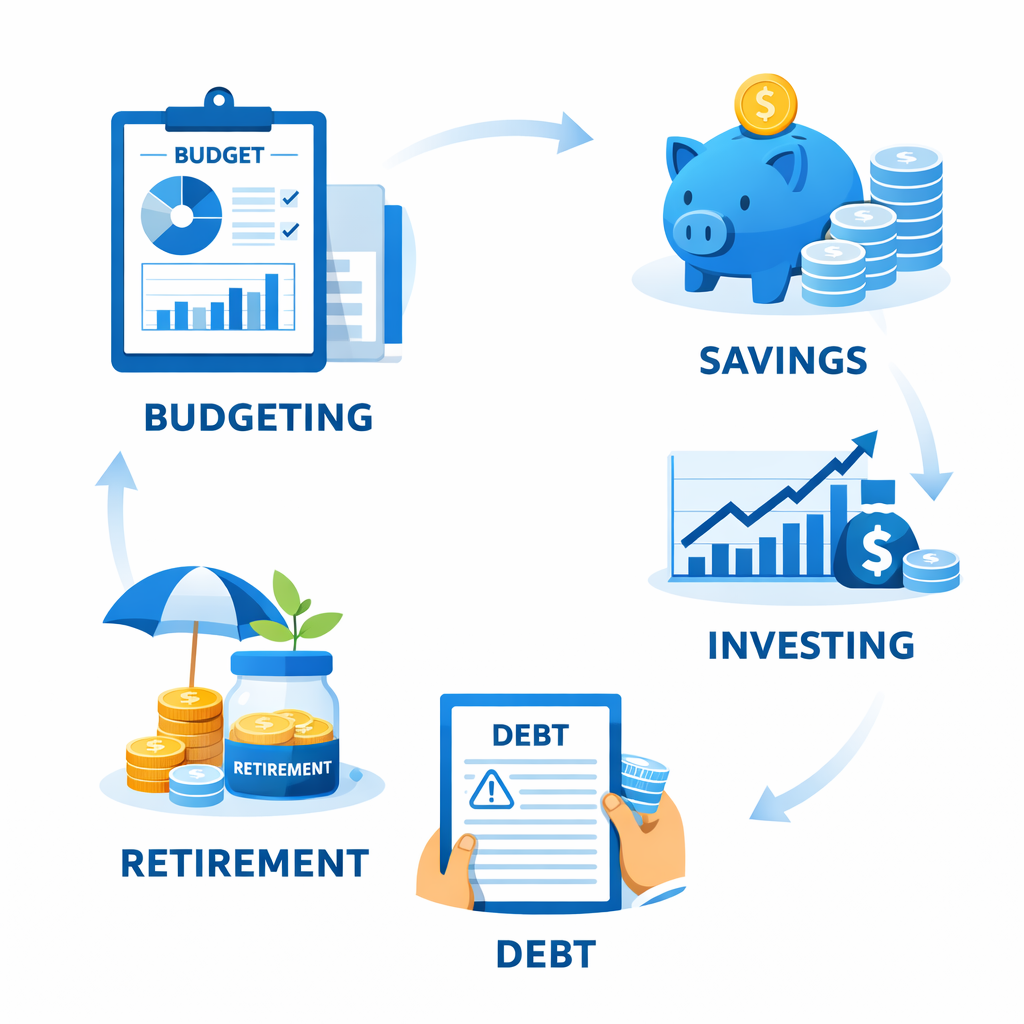
Think of it this way. Your financial life has several moving parts — your income, your spending, your debts, your savings, your investments, your taxes, and your insurance. Most people manage one or two of these. Comprehensive financial management means you are intentionally managing all of them together, as a connected system.
When these pieces work together, something remarkable happens. 1.Your savings grow faster. 2.Your debt shrinks. 3.Your investments compound. And the constant financial anxiety that most people carry around quietly? It starts to fade.
The goal of comprehensive financial management is not to restrict your life. It is to give you more freedom — the freedom to make choices without money being the deciding factor.
Why Most People Never Get There (And How to Change That)
Here is a hard truth: the majority of people approach money reactively. They earn, they spend, and then they deal with whatever is left — which is usually not much. Financial planning happens only when something goes wrong: a sudden job loss, a medical bill, or a credit card that hit its limit.
Comprehensive financial management flips this approach entirely. Instead of reacting to your financial situation, you design it.
The good news? You do not need to overhaul your entire life overnight. Small, consistent changes in how you think about and manage money will compound into massive results over time — the same way good investments do.
The Core Pillars of Comprehensive Financial Management
Let us break this down into the areas that actually matter. These are not separate topics — they are interconnected. Strength in one area supports all the others.
1. Budgeting That Actually Works
Budgeting has a bad reputation. People picture spreadsheets, restrictions, and guilt. But a real budget is not a punishment — it is a plan.
The most effective budgeting approach is simple: track where your money goes for one full month, then decide where you want it to go next month. That shift from passive to intentional is everything.
A popular framework that works well for most people is the 50/30/20 rule — roughly 50% of your take-home income covers needs, 30% goes toward the things you enjoy, and 20% is directed toward savings and financial goals. These are not hard rules. They are starting points you adjust based on your reality.
Pro tip: Budgeting apps and even a simple notes app on your phone can make tracking effortless. You do not need a complex system. You need a consistent one.
2. Building a Savings Foundation
Savings is not just about having money in a bank account. It is about having options.
The first savings goal for anyone is an emergency fund — three to six months of living expenses kept in a liquid, accessible account. Not invested. Not locked away. Just available.
Why does this matter so much? Because without an emergency fund, every unexpected expense — a car repair, a hospital visit, a gap in employment — becomes a financial crisis. With one, it is just an inconvenience.
Once your emergency fund is solid, you can build toward medium-term goals: a house deposit, a career investment, a business idea. Savings is the bridge between where you are and where you want to be.
3. Smart Debt Management
Not all debt is created equal. A mortgage on a property that is appreciating is very different from a credit card balance at 24% interest. Part of comprehensive financial management is knowing the difference — and having a clear plan for each.
High-interest consumer debt should be the priority. It compounds against you the same way good investments compound for you. Every month you carry it, it is costing you more.
Two methods work well for most people. The avalanche method focuses on the highest-interest debt first, which saves the most money overall. The snowball method focuses on the smallest balance first, which builds momentum and motivation. Neither is wrong — the best method is the one you will actually stick with.
4. Investment Planning — Making Your Money Work
Here is something that surprises many people: saving money and investing money are not the same thing. Saving preserves your money. Investing grows it.
Inflation quietly erodes the value of money sitting in a standard bank account. Over ten or twenty years, this matters enormously. A comprehensive financial management approach includes a clear investment strategy — not speculation, not get-rich-quick thinking, but consistent, diversified, long-term investing.
Common investment vehicles include stocks and index funds, which offer long-term growth with manageable risk when diversified. Real estate provides rental income and appreciation. Retirement accounts often come with significant tax advantages. Mutual funds offer professional management, which suits many beginners well.
The single most important factor in investing? Time. Starting earlier — even with small amounts — consistently outperforms starting later with larger amounts. Compound growth is genuinely one of the most powerful forces in personal finance.
5. Tax Planning
Taxes are one of the largest expenses most people face, and also one of the most misunderstood. Comprehensive financial management includes being intentional about taxes — not finding loopholes, but understanding how to legally minimize what you owe.
This might mean maximizing contributions to tax-advantaged accounts, understanding which deductions apply to your situation, or timing certain financial decisions more strategically. Over a lifetime, these decisions add up to significant sums.
If your finances have become complex, working with a qualified tax professional even once a year can pay for itself many times over.
6. Insurance and Risk Protection
Comprehensive financial management is not only about growing wealth — it is also about protecting it. One serious illness, one accident, one unforeseen disaster without proper coverage can wipe out years of careful saving and investing.
The right insurance coverage depends on your life stage and circumstances, but most people should think carefully about health insurance, life insurance (especially if others depend on your income), and income protection or disability coverage. These are not exciting purchases. They are the foundation that keeps everything else standing when life does not go according to plan.
7. Retirement Planning
Retirement planning is one of those things that everyone knows they should do and very few people start early enough. The reason is simple: retirement feels far away, and the present always feels more urgent.
But here is the mathematical reality. The difference between starting at 25 versus starting at 35 is not a ten-year delay — it is often the difference between comfortable retirement and financial struggle. Compound growth rewards patience and punishes procrastination.
You do not need a large income to begin. You need consistency. Even modest contributions made regularly, invested sensibly, can grow into genuine financial security over decades.
Creating Your Own Comprehensive Financial Management Plan
Reading about financial management is useful. Actually implementing it is where things change. Here is a practical starting point.
- Start with an honest assessment. Write down your monthly income, all your expenses, your current debts, and what you have saved or invested. You cannot navigate from where you are if you do not know where that is.
- Define what you are working toward. Clear, specific financial goals are far more motivating than vague wishes. “I want to save PKR 500,000 for a house deposit within three years” is a goal. “I want to save more money” is a wish.
- Build your budget and automate what you can. Automation removes willpower from the equation. Set up automatic transfers to your savings account on payday. Pay yourself first, then spend from what remains.
- Attack debt strategically. List all your debts, their balances, and their interest rates. Choose your repayment method and stick to it.
- Start investing, however small. Do not wait until you feel ready or until the market seems right. Both of those moments may never come. Start with what you can and increase as your income grows.
- Review your plan regularly. Life changes. Your financial plan should evolve with it. A quarterly or semi-annual review is usually enough to keep things on track.
Common Mistakes That Derail Financial Progress
Even well-intentioned people make these errors. Recognizing them is the first step to avoiding them.
Spending first, saving whatever remains. This approach almost never works. The remainder is usually zero. Reverse the order — save first, then spend.
Treating debt as normal. Some debt is unavoidable. But normalizing high-interest debt or carrying balances indefinitely is one of the most expensive financial habits a person can have.
Skipping insurance. It feels like a waste of money — until the moment it is not. Skipping coverage to save money in the short term is a risk most people cannot actually afford to take.
Delaying investment until it feels safe. Markets fluctuate. Timing the market is something even professional investors consistently fail at. Time in the market matters far more.
No emergency fund. Without one, any financial plan is fragile. An unexpected expense will send you back to debt every time.
The Role of Technology in Modern Financial Management
Managing your finances today is genuinely easier than it has ever been, thanks to technology that did not exist a generation ago.
Budgeting apps can automatically categorize your spending and show you patterns you would never notice manually. Investment platforms have removed the minimum thresholds that once kept ordinary people out of the market. Tax software makes filing more accurate and less painful. Even simple reminders and calendar alerts can prevent missed payments and the fees that come with them.
The tools are there. The question is whether you choose to use them consistently.
Final Thoughts: Financial Management Is a Skill, Not a Talent
Nobody is born knowing how to manage money well. It is a skill — which means it can be learned, practiced, and improved over time.
Comprehensive financial management does not require perfection. It requires direction. Start where you are, with what you have, and make one better decision today than you made yesterday.
The people who achieve real financial freedom are rarely the highest earners in the room. They are the ones who decided — at some point — to take their financial life seriously and build a plan they actually follow.
You can be one of those people. The best time to start was years ago. The second best time is right now.
Frequently Asked Questions About Comprehensive Financial Management
What is the first step in comprehensive financial management?
The first step is understanding your current financial situation clearly — your income, expenses, debts, and savings. You cannot build a plan without an accurate starting point.
How is comprehensive financial management different from basic budgeting?
Basic budgeting focuses on tracking income and expenses. Comprehensive financial management covers your entire financial life — budgeting, savings, debt, investments, taxes, insurance, and retirement planning, all working together as one system.
Can someone with a modest income practice comprehensive financial management?
Absolutely. Income level matters less than you think. The principles of financial management — spending less than you earn, saving consistently, avoiding high-interest debt, and investing what you can — apply at every income level. The amounts differ; the habits do not.
How often should I review my financial plan?
A quarterly review works well for most people. At minimum, review your financial plan twice a year and any time a major life change occurs — a new job, a marriage, a baby, or a significant change in income.
Is investment necessary for comprehensive financial management?
Yes. Saving alone is not enough in an inflationary environment. Investing is how you grow your wealth over time and ensure your money retains and increases its purchasing power.
What is the biggest mistake people make with financial management?
The most common mistake is starting too late — especially with saving and investing. Time is the most powerful factor in building wealth. The earlier you begin, the less you have to contribute to achieve the same outcome.