

Introduction
When it comes to the world of cryptocurrency, it has become a hot financial topic, not a tech one. Individuals of all sorts, such as students, freelancers, small business owners, and retirees, are now interested in the digital currencies like Bitcoin, Ethereum, and many others.
Early questions that are always asked are, however, where do you actually store your crypto? You can’t put this into a wallet or a bank account as with regular money. Then a cryptocurrency wallet comes in, and selecting the appropriate one is crucial and more important than you may realize.
What Exactly Is a Crypto Wallet?
A crypto wallet is not like the wallet in your pocket. Does not store coins, but is rather a portal to the coins. Rather it keeps the keys, or digits codes that demonstrate ownership of your crypto resources on the blockchain. Imagine that you have an email account. Your e-mail is stored on a server, but your password is what you need to access it. In the same way, your cryptos are located on the blockchain, and your wallet contains the credentials to access and manage your cryptos.
The most crucial tip for people who are new to the trading platform is this – Once you lose your wallet, you lose your crypto. This is why it is not a hasty decision to go with the wallet that is best for new cryptocurrency traders.
Understanding Public Keys and Private Keys
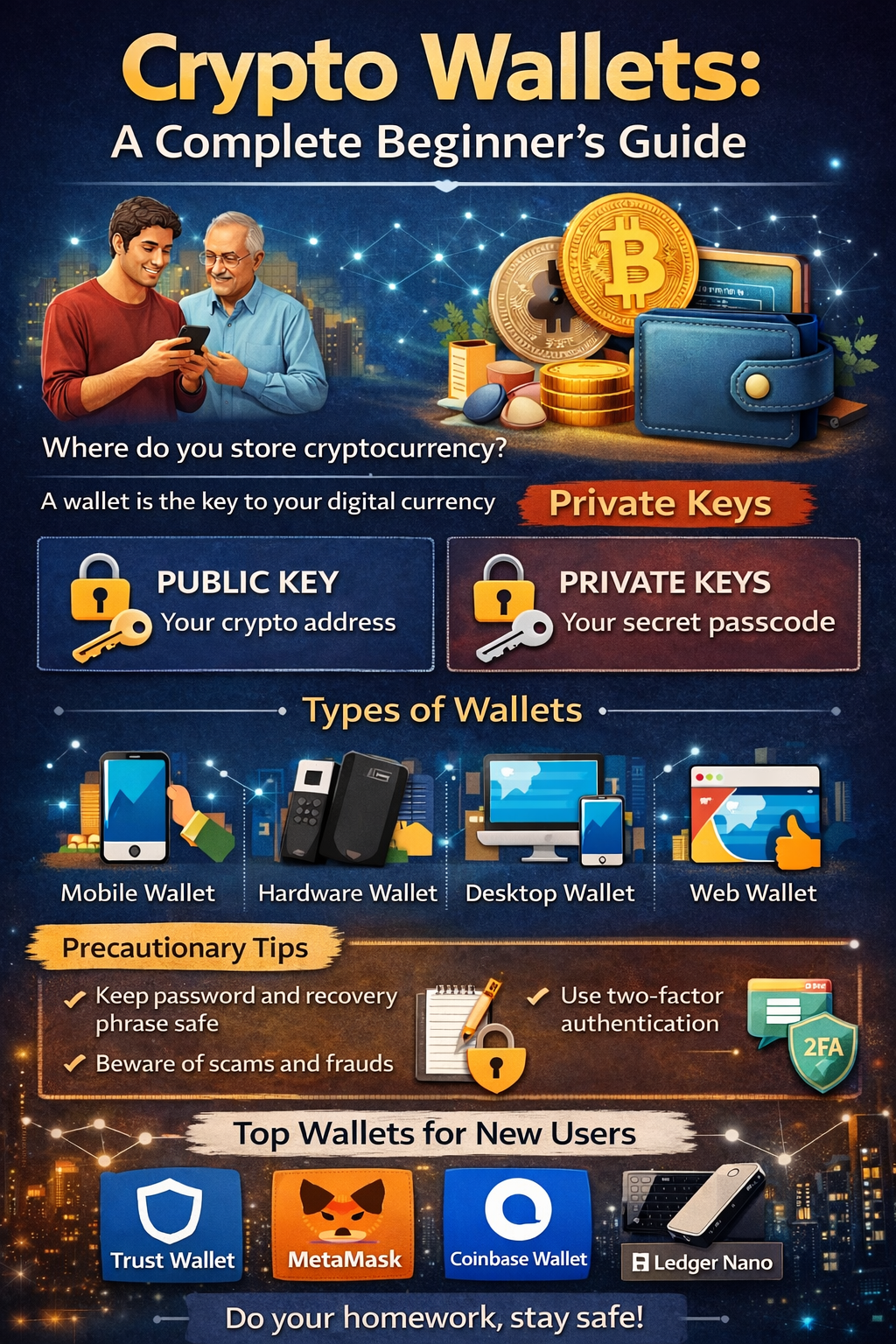
Each crypto wallet will have 2 key pieces of information. The public key is much like your bank account number, you can give it to others for them to send you crypto. The private key is quite different from that. It’s more sensitive than your PIN but is more like it. If your private key is obtained by someone else you have no way to prevent them from accessing and transferring your money.
The no. one rule of owning crypto is to keep the private key safe. Write it down, keep it somewhere safe offline and don’t give it to anyone, even trusted or close friends.
The Different Types of Crypto Wallets
There are varieties of wallets available, every kind is appropriate for different needs. Mobile wallets are apps installed on your mobile phone that enable you to access crypto easily, wherever you go. Simple to use, they are ideal for novice users. Desktop wallets are programs that can be downloaded to your desktop, and provide a bit more control and storage.
Web wallets are run via the browser and are easy to use, but they’re a little more susceptible to internet attacks. Hardware wallets are physical wallets that store your crypto offline, like a USB drive. The most secure, and often they come at a cost, and they are ideal for those who have substantial cryptocurrency holdings.
Why Beginners Especially Need a Reliable Wallet
Scams are typically aimed at new crypto users. Fraudulent websites, emails and apps are set up to scam the inexperienced into giving their information. Use a secure and reputable digital wallet to get a more secure start.
It’s also intuitive, making the process less daunting for new users by using a clean interface, clear instructions and easy navigation to help them feel confident and build their trust. The intelligent selection of the initial product reduces a number of issues afterward.
What to Look for Before Choosing a Wallet
There are some points to consider before downloading any files. First, see if it has a simple and clean interface. If you are confused within the first minute of using the app, it’s not a suitable product. Secondly, security is absolutely essential (two factor authentication, encryption, and so on).
Third, see if the wallet supports several different cryptocurrencies particularly if you are planning on holding some other than Bitcoin. Additionally, backup and recovery features are vital, and the reputation of the wallet provider is crucial.
Top Wallet Options Worth Considering
One of the most popular mobile cryptocurrency wallets to use and it’s easy to use and supported by hundreds of coins is called Trust Wallet. It is easy to use, simple to install and is suitable for every day use.
MetaMask is particularly convenient for anyone who wants to use Ethereum and decentralized applications. It’s a plug-in and mobile app, so it’s very flexible.
Coinbase Wallet is not connected to Coinbase’s exchange, but works seamlessly with it. It’s very clean, very simple and millions of users around the world trust it.
Exodus is a beautiful, desktop and mobile wallet that boasts exchange tools. Perfect for beginners seeking all the information in one spot.
If you’re looking for the highest level of security, then Ledger Nano is the deal for you. It ensures that your crypto is completely offline which makes it hard to hack remotely.
Setting Up Your First Crypto Wallet
It’s not as complicated as many people think. Firstly, download your desired wallet app from the official website or from a reliable app store. Follow the directions on the screen to create an account. Next is the most important – your recovery phrase. A series of 12 to 24 randomly generated words that the wallet generates. Write it down on paper the moment you see it, keep it in a safe place and do not photograph it or save it digitally. Once, you can add cryptocurrency with purchasing it from an exchange and transferring it to the cryptocurrency address.
Mistakes That New Users Commonly Make
The most common mistake is giving out a private key or recovery phrase to another person, even if it is someone who says they’re assisting with customer support. Heavenly wallet providers will certainly not request this details. The other common error is downloading a wallet from an unofficial source as it may be a fake app to steal your money.
Another vulnerability is weak passwords. You should not use information such as your name or birthday, because it’s easy to guess. Lastly, many novice users neglect to set up a back-up, and become panicked about when they change their phones. Backups come in handy for saving everything and take just 2 minutes.
Practical Tips to Keep Your Digital Assets Safe
Set up two-factor authentication on all platforms that are part of your crypto endeavours. Don’t keep your recovery phrase in any notes app, email draft or on cloud storage, keep it on paper. Update wallet applications – updates are made regularly with security patches. Don’t log into your wallet on public Wi-Fi as others can see what you’re doing. These habits require little effort, but are having a huge impact on your overall security.
The Honest Pros and Cons of Using Crypto Wallets
Pros:
- You are not obliged to keep your money in a bank and have it controlled by them
- It’s easy to access — transactions can take only a matter of minutes.
- Improved privacy than in the conventional financial systems.
- Acceptable for international transfers (may need to pay a lower fee)
Cons:
- If someone forgets their password or loses their recovery phrase, it could cause the loss of one’s funds forever.
- Scam apps, phishing are especially targeting wallet users.
- Others wallets can be a little tricky to learn, and may frustrate total novices.
Where Crypto Wallets Are Headed
The secure crypto apps world is progressing quickly. Platforms are making serious investments to improve the usability of the wallet, while maintaining its security. You can see biometric authentication, more intelligent recovery systems and greater integration with decentralized finance instruments now more frequently.
As more and more people around the world are adopting cryptocurrency, wallets will increasingly evolve to address the needs of millions of people just starting their exploration of cryptocurrencies.
Conclusion
In fact, selecting the best crypto wallet for novices is among one of the most important initial decisions you’ll make on your crypto journey. Don’t rush, do your homework and make sure that security is the top priority. Technology is available and accessible; tools are available; and it is not as complicated as you may think to get started.
The most important thing is to establish good habits from the start, such as keeping keys safe, using trusted platforms and never making hasty decisions when they’re under stress. Security of your crypt depends upon the lifestyle you develop.
Frequently Asked Questions
1. May I have more than one cryptocurrency wallet?
Absolutely. A lot of users have more than one wallet that they use for various reasons, such as the hardware wallet for larger amounts of currency to be stored in the long term, and the other for their everyday transactions.
2. If I lose my mobile phone that has my wallet application on it, what happens?
As long as you have your recovery phrase with you you can recover your wallet on any other new device. That’s why it’s really important to keep this phrase safe.
3. Do crypto wallets have a fee?
There is plenty of mobile and desktop wallets to download and use, most of which are free. Hardware wallets are a purchase that comes with a price tag, but are the most secure option for hardcore investors.
4. Can Crypto be stored on an exchange rather than a wallet?
Exchanges maintain your cryptos in your name and you don’t have complete control of your private keys. The advantage of using a personal wallet is that you have the wallet for yourself and that is usually a safer way to store it for the longer term.
5. What wallet is the best one for the absolute novice?
Both Trust Wallet and Coinbase Wallet have a wide range of coins, great security, and are simple to use. Both are good for the novice.